

The Foundation for Democracy in Iran is in mourning over the deathon January 9, 2000 in Paris of board member Mehdi Rouhani,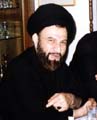 from pancreatic cancer. Ayatollah Rouhani, the leader of the ShiiteMuslim community in Europe and an outspoken opponent of the Tehranregime, was 67. He died at home, surrounded by his immediatefamily.
Over his long and distinguished career, Dr. Rouhani constantlyemphasized religious tolerance, and sought to build bridges among theworld's great Monotheistic religions.
Dr. Rouhani was a unwavering opponent of the doctrine of Velayat-eFaghih (absolute clerical rule) that since 1979 has brought ruin toIran and caused her people so much blood and sorrow. He dedicated hislife to revealing the true face of Islam, an Islam of tolerance andlove, faith and community.
"I will always fondly remember the hours and hours we spentdiscussing Islam and politics in his home in Paris over the pastfifteen years," said FDI Executive Director Kenneth R. Timmerman. "Isalute Dr. Rouhani's unwavering courage, and his moral clarity. Hisdeath strikes a blow to freedom-loving Iranians who saw in Dr.Rouhani's principled rejection of the Islamic Republic a beacon ofhope in their struggle to 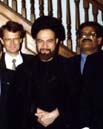 drivethe clerical clique from power. My wife Christina and I will miss himdearly, and will always keep a cherished place for him in our heartsand in our home."
Dr. Rouhani is survived by his wife, Shams, and their threechildren: Fouad, Foroud, and Victoria. An older brother, GrandAyatollah Sadegh Rouhani, remains under house arrest in Iran for hisopposition to the ruling clerical regime. A third brother, GrandAyatollah Mohammad Rouhani, died at his home in Qom on July 25, 1997under mysterious circumstances. He had also been under house arrestby the regime for his outspoken opposition to absolute clericalrule.
Highlights from Dr. Rouhani's career.
Born in April 1932, Mehdi Rouhani became a "mujtahed," one of thehighest grades of Islamic scholarship, at the age of 26 in 1958,after studying with Ayatollah Borujerdi in Qom and for several yearsat Islamic centers in Najaf, Iraq.
He was drawn to Europe early on, and began studying in France in1960, completing his PhD thesis in 1964. In 1967, he formed theIslamic-Christian Friendship Society in Paris, for which he wasawarded the Vatican Gold Medal.
In 1976, back in Tehran, he created the Monotheistic Front tofoster inter-faith dialogue. One year later, in recognition of hisefforts, he was received at the Vatican by Pope Paul VI.
Following the 1979 Iranian revolution, Dr. Rouhani became one ofthe most outspoken opponents of the Islamic Republic, challenging theauthority of the regime on religious grounds. He was regularlyinterviewed by the BBC, Voice of America, Radio France, and otherinternational media, and wrote more than 100 articles and essays onreligious topics.
Dr. Rouhani has traveled around the world to address seminars onIslam and its relationship to other monotheist religions. He has beenreceived by Pope Jean-Paul II, as well as by leading Jewish communityleaders. In 1995, he became a founding member of the Board ofDirectors of the Foundation for Democracy in Iran. In October of thatyear, he was a guest speaker at an international conference onMuslim-Jewish relations sponsored by the Simon Wiesenthal Center.
FDI has had the pleasure and the honor of organizing several tripsto the United States for Dr. Rouhani in recent years, includinghigh-level meetings at the Pentagon, the Department of State, andwith U.S. Jewish leaders and intellectuals.
Dr. Rouhani welcomed the efforts of Iranian President Khatami toliberalize Iranian society, but he cautioned Western analysts againstwishful thinking. For President Khatami to maintain his legitimacy inthe eyes of the Iranian people, Dr. Rouhani warned repeatedly, "hewill have to work to dismantle the regime." Speaking in the name ofsenior Iranian conservative clerics, Rouhani said: "We supportKhatami, and the West should support Khatami - but only in so far ashe opposes the regime of Velayat-e Faghih."
In one unusual visit, organized by FDI, Dr. Rouhani met with topU.S. government analysts at Bolling Air Force base outside ofWashington. Upon entering the building and seeing a memorial in honorof U.S. servicemen who died while serving their country overseas, Dr.Rouhani paused and spontaneously offered a prayer.
"It was gestures like these that made Mehdi Rouhani a tremendouspolitical force, and a wonderful human being," said FDI'sTimmerman.
Persons wishing to send their condolences to the Rouhani familyare invited to send an e-mail to: rouhani@iran.org.
More on Dr. Rouhani's activities at FDI:
Ayatollah MehdiRouhani welcomes Khatami, but warns U.S., May 2, 1998
Senior Iranianclerics say "Islamic" Republic is not Islamic
FDI's Rouhanireceived by State Department
The AyatollahsSpeak out.Excerpts from a 1995 interview thatappeared in The Iran Brief.
The Foundation for Democracy in Iran is a private, non-profitcorporation registered in the State of Maryland. Contact: Kenneth R.Timmerman, Executive Director. Tel: (301) 946-2918. Fax: (301)942-5341. FDI materials, including the FDI Newswire, are availablefree-of-charge via the Internet at http://www.iran.org